
Mihiwaka - Kāpuka-Taumāhaka/Mount Cargill
Site Led Pest Plant Control
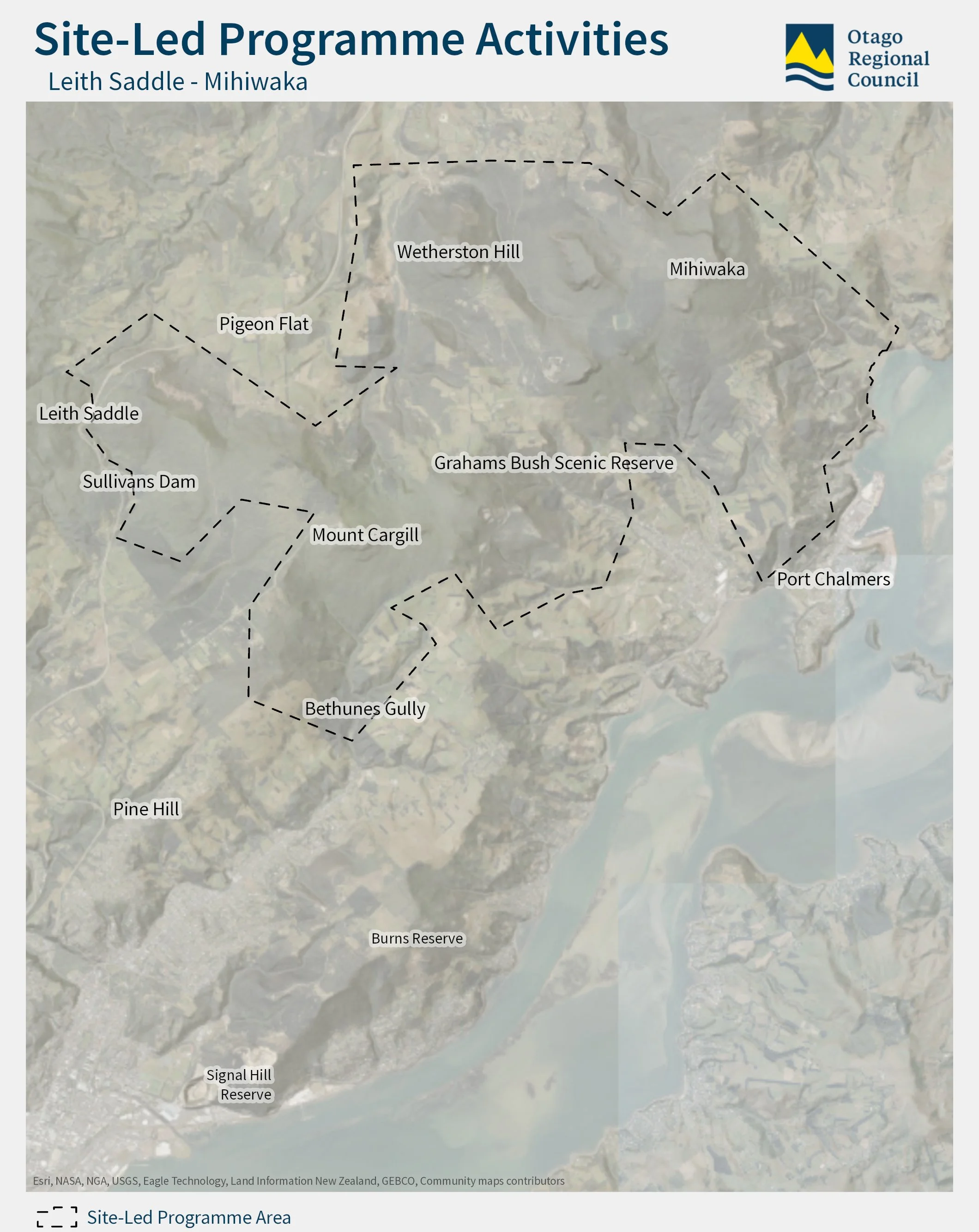
Above: The Site-Led Programme boundary
The Halo Project received funding from the Otago Regional Council to survey and remove six pest plant species from this area to ensure that our native flora and fauna thrive.
We’d love your help to achieve this goal! These species were identified in the Otago Regional Council’s ‘Regional Pest Management Plan’ as they present a threat to the values of the this area. Each of these plants can dominate the habitat in which they grow, outcompeting our native flora and reducing the habitat available to our native fauna.
The Halo Project Source to Sea team and volunteers will be surveying the area for these plants in the coming months. We’d love to hear from you if you have seen these plants in this landscape! You can report the location of these pest plants using the form at the bottom of this page or by visiting iNaturalist.
To learn more about environmental weeds and how to control them check out: www.weedbusters.org.nz.
The pest plants we are targeting are:
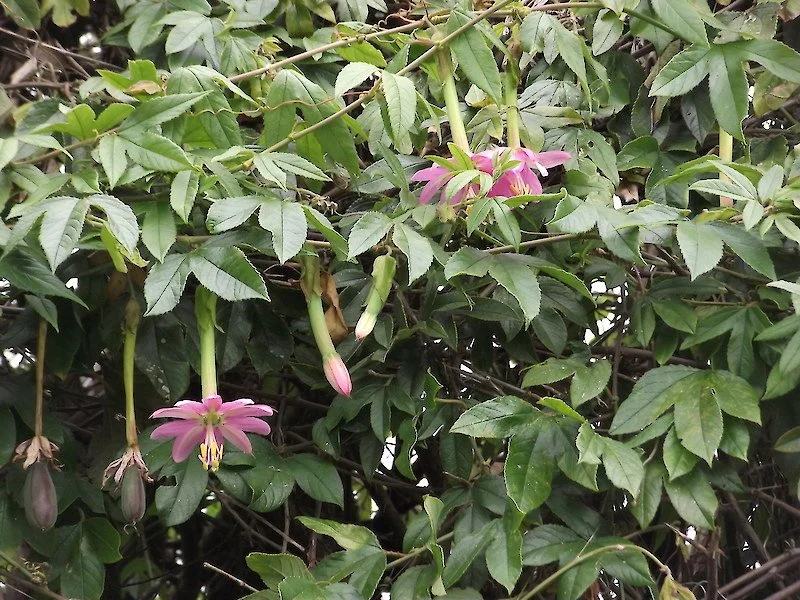
Banana Passionfruit
What: Tall, climbing vines producing large pink tubular flowers that develop into oval fruit that turn orange-yellow when ripe.
Why: Fruit is eaten and spread by animals. It is capable of smothering other plants and dominating the canopy. It grows rapidly and its stems will layer. Due to this it poses adverse effects to environmental and biodiversity values of the region.

Sycamore
What: Deciduous trees (<20m tall) with smooth grey bark and hairless green shoots.
Why: Forms dense (often pure) stands. Possibly able to release toxins into the soil to stop other plants growing near it. The dense stands prevent recruitment of other species.

Tradescantia (wandering willie)
What: A trailing, soft, hairless perennial groundcover with succulent, creeping stems.
Why: It rapidly establishes from fragments smothering entire areas and preventing native species establishing. Notably, it also causes allergic dermatitis when in contact with cats, dogs and humans and is toxic to pets when ingested.

Gunnera
What: A large, clump-forming, summer-green herb (up to 2m) growing from stout horizontal rhizomes with large sized leaves (80 cm x 1 m). Dies down over winter in cold climates and grows new leaves in spring.
Why: It is known in other regions to shade out other plants, forming dense stands/clumps, spreading to bluffs, wet cliffs and near waterways.

Chilean Flame Creeper
What: A climbing, hairless perennial with a thick rootstock. It has slender stems with curling tendrils. The dull, soft, light green leaves have five leaflets. Tubular scarlet flowers from November to April.
Why: Dispersed by birds, its ability to climb to canopy height causes smothering of bush areas and the prevention of native species establishment.

Darwin’s Barberry
What: Evergreen, spiny shrub with woody and densely hairy stems. Hairless, glossy, dark green leaves, serrated along edges. Hanging clusters of deep orange-yellow flowers appear from July to February followed by oval purple-black berries.
Why: Tolerates most conditions. Animals spread seeds. Forms dense colonies that replace existing vegetation and prevent the establishment of desirable plants.
Please let us know if you have seen any of these pest plants!